
 Rasika Karkare
Mental health has emerged as one of the most pressing public health concerns in India. From depression and anxiety to OCD, schizophrenia, and eating disorders, millions of Indians are affected by mental health conditions every year. This article brings together the latest statistics, research findings, and trends on the most common mental health disorders in India, along with a closer look at how mental health care differs between urban and rural areas.
All information presented here has been meticulously researched from verified sources and checked by our lead psychologist, Ms. Rasika Karkare.
Depression in India: The Latest Statistics
Depression is a condition that affects millions of people globally, and India is no exception. While some studies suggest that the rate of depression is escalating, others argue that it is on a downward trajectory. As one of India's leading online therapy platforms, Mind Voyage, we have been on the front lines, experiencing a significant uptick in therapy sessions, particularly following the onset of the pandemic.
We have examined the rates of depression in India using two primary methodologies:
- Surveys and
- Data science
Both approaches offer unique insights into this issue.
Depression Rate in India (Updated, April 2023): Survey Insights
The National Institute of Mental Health and Neurosciences (NIMHANS) and The National Mental Health Survey (NHMS) conducted the last comprehensive Mental Health Survey in India in 2015. Several other smaller-scale surveys have been carried out by organisations such as UNICEF and Deloitte. However, these do not provide a complete image of depression rates across the country.
The Union Ministry of Health & Family Welfare recently announced the launch of a new Mental Health Survey, the first in eight years, targeting metropolitan cities in India. We anticipate a more accurate representation of depression rates upon the conclusion of this survey, expected between 2024 and 2025.
According to the 2015 NHMS survey, one in every 20 Indians, or 5.3% of the population, was found to have suffered from depressive disorders at some point in their lives.
The 2015-16 National Mental Health Survey further revealed that 15% of Indian adults require active intervention for one or more mental health issues. The same survey indicated that at the time of the survey, 2.7% were reported to be actively dealing with these disorders.
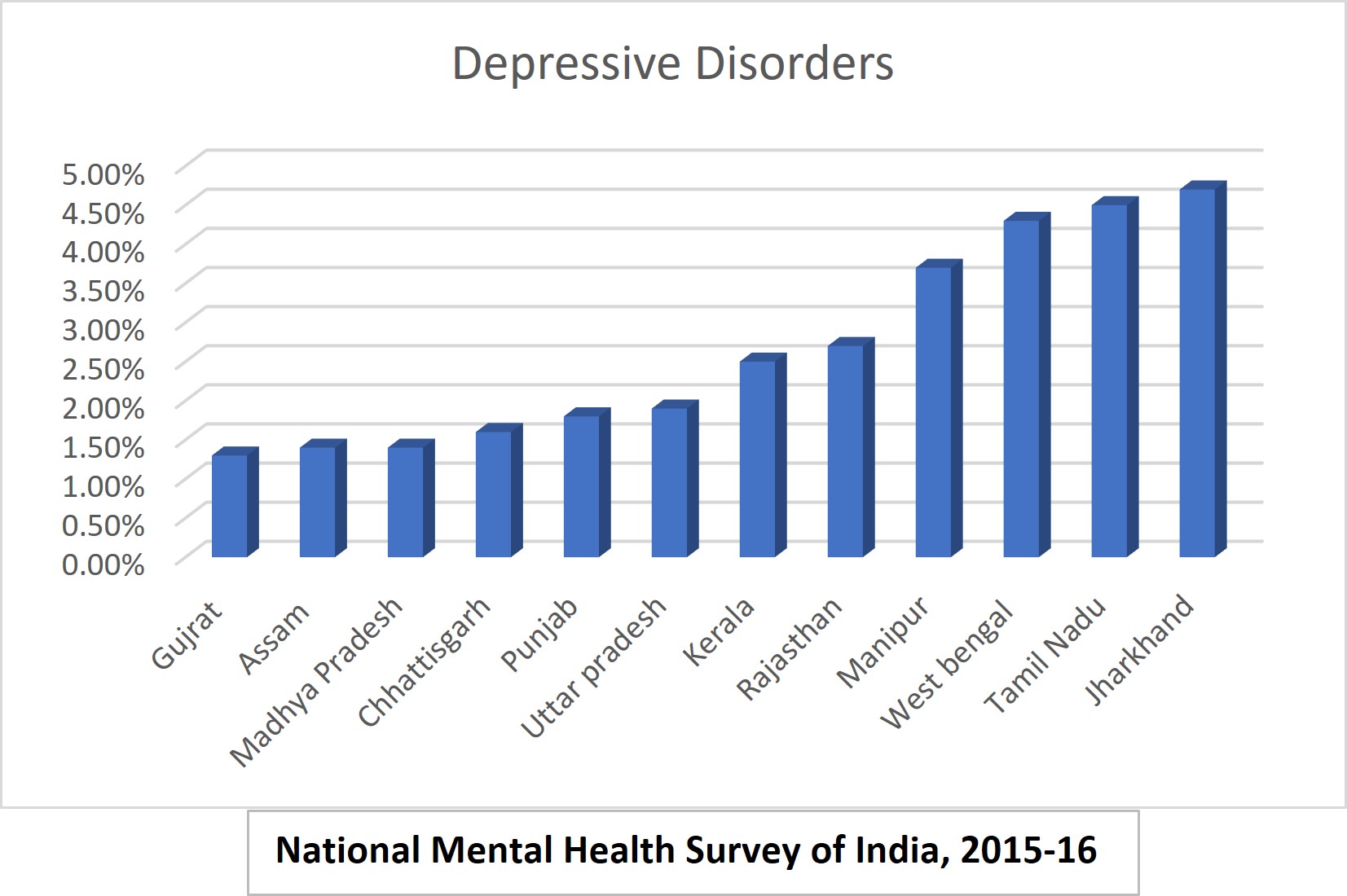
The above chart shows the prevalence of depressive disorders in different states at the time of the survey.
Depression Rates in India: A Data Science Analysis
To further our understanding of depression rates in India, we collaborated with leading data science professionals. Utilising publicly available data from Google, we gauged the interest in depression based on search data, providing an indirect indicator of its prevalence.
Our analysis shows that the number of Indians seeking information about depression symptoms has doubled since 2018, peaking in 2020 with the onset of the COVID-19 pandemic and maintaining an upward trajectory thereafter.
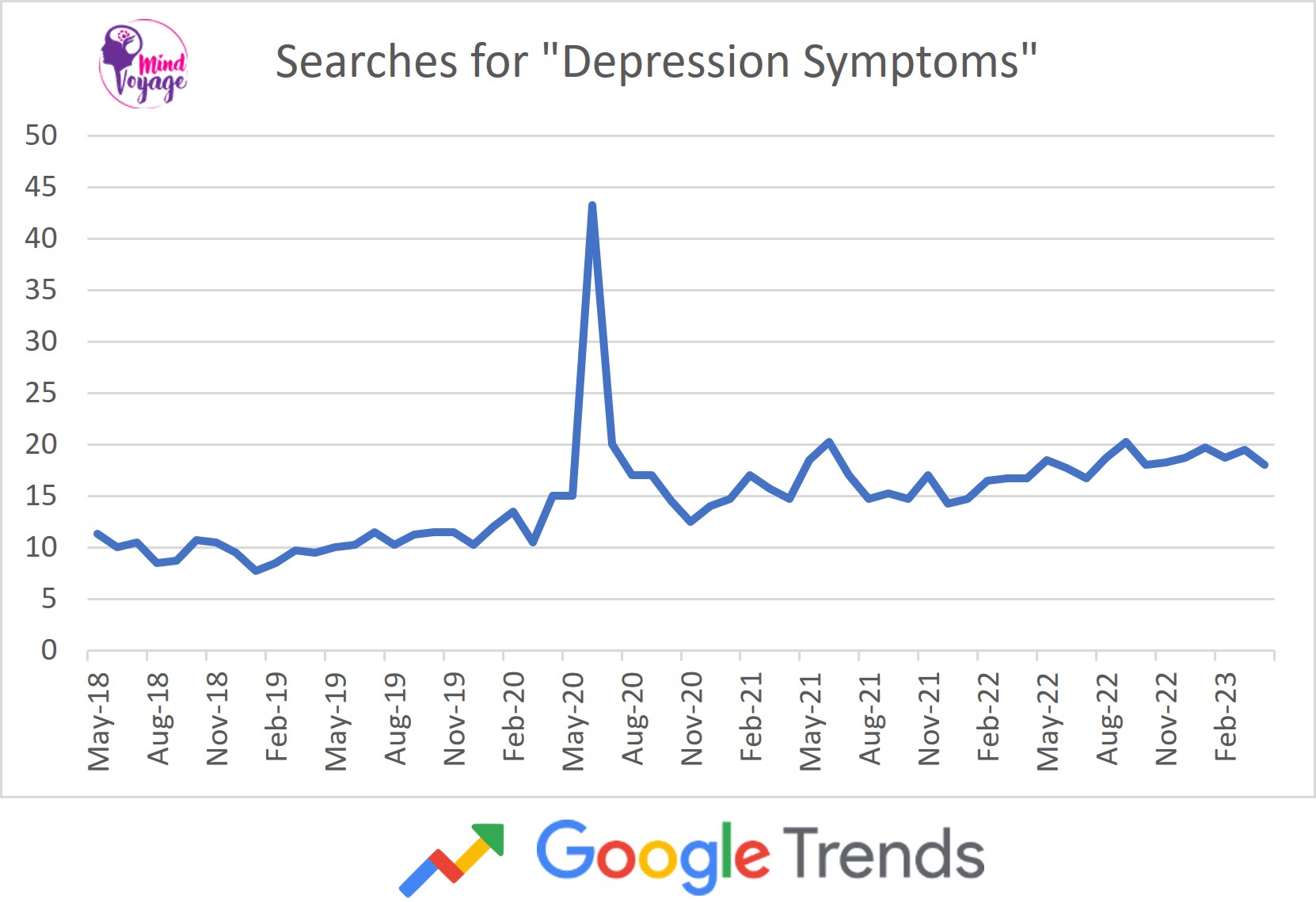
Source – Google Trends
Insights from Other Reputed Organisations
Supplementing the government data, surveys conducted by reputed organisations offer additional perspective. According to a Deloitte survey of 3,995 employees in 2021-2022, 59% reported symptoms of depression, including feelings of sadness, lack of interest, fatigue, concentration issues, and poor decision-making.
In a 2021 UNICEF survey, around 14% of 15 to 24-year-olds in India reported frequently feeling depressed or disinterested. The World Health Organization's 2015 report suggested that 4.5% of the Indian population, or approximately 56,675,969 people, were affected by depressive disorders.
The rising statistics underscore the urgency of addressing depression in India to enhance the overall quality of life. While it may not be possible to prevent depression entirely, proactive measures can potentially mitigate recurrence in individuals who have previously experienced it.
Latest Statistics of Anxiety Disorders in India
Approximately one in seven Indians suffer from a mental health disorder. Anxiety is a disorder with a global presence, and India is no exception. In recent years, there have been multiple studies suggesting that Anxiety is on a steep rise in India.
The National Mental Health Survey (NHMS)
The National Mental Health Survey (NHMS) is the last comprehensive Mental Health Assessment conducted in India in 2015-16. The survey reports that almost 15% of Indians need active intervention for one or more mental health issues. The survey estimated that about 3.5% of India's population suffered from some form of stress or anxiety-related disorder. That seems like a modest figure at first, but it amounts to more than 40 million in India which is quite a large number.
The same survey also reports that the prevalence of anxiety disorders –
- Age related: is the highest between the ages of 18 to 29 years
- Gender-related: females were more likely to be impacted by Anxiety as compared to males.
- Common diagnosis: The survey also reported that Agoraphobia was the most common anxiety disorder followed by Generalized Anxiety disorder.
- Urban Vs Rural areas: People living in urban areas were more likely to be affected by anxiety disorders than those living in rural areas.
The survey also mentioned that around 9.8 million kids aged 13-17 needed help with their mental health. Among these children, agoraphobia was a common issue, affecting nearly 2.6% of them. Phobic anxiety disorder was another problem, impacting 1.3% of children in this age group.
Other Studies on the Prevalence of Anxiety
A study conducted by Lancet in 2017 estimated that almost 197 million people had mental health disorders in India. Depression was the most common disorder affecting 45.9 million people followed by Anxiety impacting 44.9 million (3.3% of India's population). It also states that more females seem to be impacted by anxiety as compared to males. The study also found that the prevalence of anxiety was the highest in Kerala followed by Manipur, West Bengal, Himachal Pradesh and Andhra Pradesh.
According to the data published by the World Health Organization in 2017, it was estimated that almost 38 million people in India suffer from anxiety disorders making it the second most common disorder after depression.
Anxiety Trends Since COVID-19 Pandemic
The COVID-19 pandemic had a significant impact on global mental health with WHO estimating a 25% increase in the prevalence of anxiety and depression during the pandemic at a global level. Similar trends were observed in India. A Lancet study in 2021 reported a 35% rise in anxiety disorders in India during the pandemic. The study also found that women and younger people were highly impacted by anxiety and depression as compared to men and senior citizens.
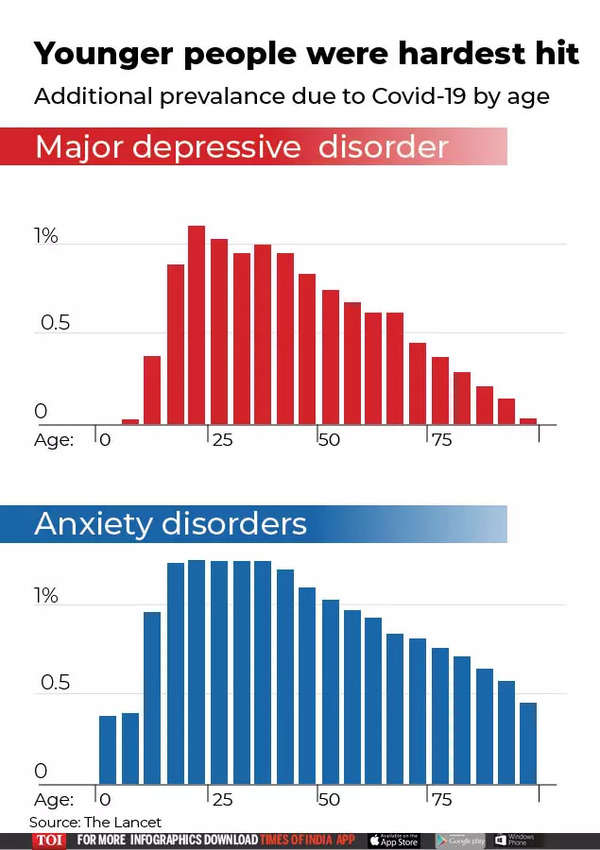
Image Credits: Times of India
Similar findings were reported by the World Health Organization's (WHO) data published in 2020. The data reported that almost 9.3% of India's youth between the ages 18 to 24 years suffered from either Anxiety or depression during the early days of the pandemic, this number increased to 16.8% by March 2022. The report also suggests that more women were impacted by anxiety and depression as compared to men.
The current trends, especially the data from the COVID-19 pandemic suggest an increase in anxiety disorders among youth which is certainly alarming as almost 65% of the Indian population is under the age of 35. The rising anxiety statistics also suggest a need for effective intervention to meet the growing demand for mental health services in the country.
Most Common Mental Disorders in India
Mental health is a term in India that has widespread stigma and discrimination attached to it. India, being a developing country, has the highest prevalence of mental illnesses, more than any other country in the world.
According to the National Mental Health Survey, more than 13% of Indians will experience "deteriorated" mental health at some point in their lives.
It is no surprise, then, that there are many common mental health illnesses that Indians suffer from. Here are some of the most common ones:
Depression
The World Health Organization's data shows that at least 57 million people in India are affected by depression.
Some early signs of depression include:
- Constant sadness for prolonged periods.
- Loss of interest in personal and social activities.
- Low self-worth
- Erratic sleep cycles
- Loss of appetite
- Loss of interest in daily activities
Each of these activities can harm a person in different ways. It can affect their school and office work, as well as many other areas of their lives.
If depression progresses and becomes severe – suicidal thoughts and actions may set in.
Hence, support from friends and family and therapy from health experts is a must.
Anxiety Disorders
There are many forms of anxiety disorders. According to the National Mental Health Survey data, phobic anxiety disorders (anxiety as a result of intense fear) account for nearly 2% of the disease burden in India, and other anxiety disorders make up for an additional 1.2%. Obsessive-compulsive disorder (OCD) makes up 0.8% of the disease burden in India.
Those living with anxiety disorders may feel irritable, restless, and angry and have difficulty concentrating or sleeping.
It should be noted that, to some extent, anxiety is a normal emotion in situations that provoke fear or excitement. However, when the frequency or intensity of such anxiety spikes, it may be a sign of an anxiety disorder.
Anxiety disorders can be managed with therapies that help relieve stress. Previous studies have shown that behavioural and psychological therapy have positive clinical results.
Schizophrenia
Schizophrenia is a psychotic condition characterized by delusions and hallucinations. People with schizophrenia are often out of touch with reality around them and, hence, are likely to see, hear and feel things that do not exist in reality. They are also likely to show emotional and behavioural imbalances, like laughing without a reason and mumbling.
According to the National Mental Health Survey, almost 0.8% of the Indian population is affected by schizophrenia. Another study indicates that 7% of people with mental illnesses in India suffer from schizophrenia.
Schizophrenia is best treated with medication. Psychosocial support can also be great. However, as this illness progresses, patients often tend to become reluctant to seek medical help.
Bipolar Disorder
Bipolar is a disorder that is associated with episodes of mood swings ranging from depressive lows to manic highs.
Such a disorder is characterized by:
- Sudden changes in mood
- Irritation
- Loud speech
- Increased activity and decreased sleeping time
The latest statistics indicate that almost 0.3% of India's population suffers from Bipolar Disorder.
Medicines, psychological therapy and support from friends, family and society can help manage this condition.
Eating Disorder
Anorexia nervosa, which is self-starvation and Bulimia nervosa, which is binge eating followed by purging or vomiting, and then a period of starvation and excessive physical activity, are a few examples of eating disorders.
Eating disorders are on the rise in India. The National Mental Health Survey, conducted in 2015, reported that about 2% of India's population suffers from eating disorders. In 2018, another study revealed that 6.5% of teenage girls in India experienced eating disorders. Additional research also reveals that women are at a greater risk of developing an eating disorder as compared to men.
Anorexia nervosa, bulimia nervosa, and binge-eating disorder stand out as the most frequently diagnosed eating disorders in India.
Eating disorders have strong psychological connections and need to be controlled from an early stage.
Awareness, nutritional guidance and psychotherapy can help treat eating disorders. Doctors may also prescribe medicines in severe cases.
In conclusion, it is important that we take note of or recognise such signs for each of these disorders and help those in need. Most people often miss such signs and symptoms of mental disturbances. Hence, psychoeducation and systematic understanding or awareness of these illnesses are imperative.
Mental Health in Rural Areas vs Urban
Mental health awareness has been on the rise in India, especially after the COVID-19 pandemic, with more and more people opting for mental health consultations. However, mental health care remains a major challenge across the country, in both urban and rural areas. Thus, both urban and rural India grapple with mental health challenges, and the nature of these differs significantly.
Mental Health in Rural Areas
Almost 65% of India's population lives in rural areas, making it a vast majority. However, there are many challenges when it comes to mental health care in rural areas. They are:
Lack of Awareness
Lack of mental health education and awareness is one of the major barriers to help-seeking in rural areas. Most people do not know whom to approach for mental health issues or how to identify the symptoms of any mental illness. Thus, people often visit tombs and religious places to seek help.
According to a Lancet study published in 2023, many people in rural areas attribute mental health issues to black magic and seek treatment at religious institutions. Some people even reported stopping medication as they believed they could get better only through faith healing.
These practices put patients at a high risk of misdiagnosis, leading to ineffective treatment and the aggravation of mental health conditions.
Treatment Gap
Research in 2018 found that almost 5.3% of the rural population was at risk of developing common mental health disorders such as anxiety or depression but only a few of them sought help. A high treatment gap is one of the reasons for this trend. Even if people want to seek help for mental health issues, there aren't enough psychologists or psychiatrists available to support the large number. This leaves many people no option but to rely on faith healers or general practitioners for help.
Stigma
Another challenge in rural mental health is the stigma associated with mental health issues. Thus, many people experiencing mental health issues face social exclusion. Such practices discourage people from seeking help for mental health.
Considering the above-mentioned challenges, India needs stronger mental health awareness and infrastructure in rural areas, which can be achieved by strengthening the District Mental Health Programme and careful implementation of the Mental Healthcare Act of 2017.
Mental Health in Urban Areas
Increased Awareness And Help-Seeking
The mental health situation in urban areas seems to be improving with increased awareness and help-seeking, especially after the COVID-19 pandemic. According to a Practo survey conducted in 2022, the number of mental health consultations sought on their app increased by 66% year on year. The same survey reported that the majority of mental health consultations were sought by women under the age of 35.
Another survey published by Practo in 2023 found a 29% year-on-year increase in offline consultations booked through the app. The same survey also reported that men generally opt for in-person consultations, while women prefer online appointments. In the same data, it was found that the majority of the mental health consultations came from Tier 1 cities such as Delhi, Bangalore, Mumbai, Hyderabad, Chennai and Pune, and the majority of the help-seeking population was aged between 18-44 suggesting high mental-health awareness among young adults and middle-aged population.
Increased Mental-Health Start-Ups
The rise in demand for mental health services has led to multiple mental-health start-ups. As per a report in 2023, there are almost 280 mental health startups in India. Many of these startups have received funding as well, which is likely to encourage more mental-health startups soon. Increasing mental-health start-ups might lead to increased affordability and accessibility of services as well.
Quality of Care – A Major Challenge
While increased awareness and help-seeking are positives, there is still a long way to go when it comes to ensuring the quality of mental health care in urban areas. Due to a lack of government regulations, there has been a rise in people giving mental health advice over the Internet, without appropriate qualifications. People are providing mental health services without appropriate qualifications as well.
This has led to a spread of misinformation, which only fuels the pre-existing stigma. Stricter Government regulation is a necessity to ensure, there is no misinformation and that people can access the right and qualified professionals for help.
Conclusion
While mental health awareness and mental health startups are rising in urban areas, there is still a treatment gap, with a limited number of psychologists and psychiatrists serving the large population. A similar treatment gap exists in rural areas as well. In conclusion, both urban and rural areas need better mental health infrastructures and stricter regulations to curb misinformation. The rising prevalence of depression, anxiety, OCD, and other common mental disorders calls for urgent attention, greater psychoeducation, and accessible mental health support across the country.
References
7 per cent of mentally ill Indians suffer from schizophrenia, says study. (n.d.). India Today. Retrieved February 29, 2024, from https://www.indiatoday.in/health/story/7-percent-mentally-ill-indians-suffer-from-schizophrenia-study-mental-health-1953718-2022-05-24
74% Indians suffering from stress, 88% from anxiety: Study. (n.d.). The Indian Express. Retrieved September 29, 2023, from https://indianexpress.com/article/lifestyle/health/indians-stress-anxiety-mental-health-study-7101237/
A look at the three most common mental illnesses. (n.d.). Inspira Health Network. Retrieved March 1, 2024, from https://www.inspirahealthnetwork.org/news/look-three-most-common-mental-illnesses
Anxiety, depression, panic attacks: How Covid took mental toll on Indians. (2022, March 28). The Times of India. https://timesofindia.indiatimes.com/india/anxiety-depression-panic-attacks-how-covid-took-mental-toll-on-indians/articleshow/90492430.cms
Bawaskar, H. S., Sapkal, G. H., & Bawaskar, P. H. (2024). The complexities of mental health in rural India. The Lancet, 403(10435), 1444–1445. https://doi.org/10.1016/S0140-6736(23)01911-6
Deloitte. (2022). Mental health and well-being in the workplace. https://www2.deloitte.com/in/en/pages/life-sciences-and-healthcare/articles/mental-health-2022.html
Eating Disorder Awareness Week in India 2023. (n.d.). Skooc. Retrieved February 29, 2024, from https://www.skooc.com/blog/eating-disorder-awareness-week-in-india-2023
FE Mental Health Series | How apps are changing consultation landscape amid drought of experts in India. (2024, May 27). Financial Express. https://www.financialexpress.com/business/healthcare-fe-mental-health-series-how-apps-are-changing-consultation-landscape-amid-drought-of-experts-in-india-3502372/
Ferrari, A. J. (2021). Global prevalence and burden of depressive and anxiety disorders in 204 countries and territories in 2020 due to the COVID-19 pandemic. The Lancet, 398(10312), 1700–1712. https://doi.org/10.1016/S0140-6736(21)02143-7
Gupta, R. (2024). Rural–Urban divide in mental health care in India: Bridging the gaps. Indian Journal of Social Psychiatry, 40(1), 7. https://doi.org/10.4103/ijsp.ijsp_41_24
Kallakuri, S., Devarapalli, S., Tripathi, A. P., Patel, A., & Maulik, P. K. (2018). Common mental disorders and risk factors in rural India: Baseline data from the SMART mental health project. BJPsych Open, 4(4), 192–198. https://doi.org/10.1192/bjo.2018.28
Kumar, A. (2011). Mental health services in rural India: Challenges and prospects. Health, 3(12). https://doi.org/10.4236/health.2011.312126
Manjunatha, N., Jayasankar, P., Suhas, S., Rao, G. N., Gopalkrishna, G., Varghese, M., & Benegal, V. (2022). Prevalence and its correlates of anxiety disorders from India's National Mental Health Survey 2016. Indian Journal of Psychiatry, 64(2), 138–142. https://doi.org/10.4103/indianjpsychiatry.indianjpsychiatry_964_21
Matharu, S. (2023, July 5). Everyone's a therapist in India—Influencers, dentists, homeopaths. It's the new epidemic. The Print. https://theprint.in/ground-reports/everyones-a-therapist-in-india-influencers-dentists-homeopaths-its-the-new-epidemic/1655337/
Mental disorders among 20 crore Indians: Breakup among states. (2019, December 25). The Indian Express. https://indianexpress.com/article/explained/mental-disorders-among-20-crore-indians-breakup-among-states-6183454/
Ministry of Health and Family Welfare. (2016). National Mental Health Survey of India, 2015-16: Mental health systems. https://main.mohfw.gov.in/sites/default/files/National%20Mental%20Health%20Survey%2C%202015-16%20-%20Mental%20Health%20Systems_0.pdf
Standard, B. (2023, October 10). Mental health: Women opt for teleconsultations, while men prefer in-person. Business Standard. https://www.business-standard.com/health/mental-health-women-opt-for-teleconsultations-while-men-prefer-in-person-123101000213_1.html
Standard, B. (2023, October 11). Four-fold surge in mental health consultations: How much does insurance cover? Business Standard. https://www.business-standard.com/finance/personal-finance/four-fold-surge-in-mental-health-consultations-how-much-does-insurance-cover-123101100202_1.html
Surge in consultations for Oncology and Mental Health among Indian women in 2022: Practo Insights. (n.d.). Practo Digest. Retrieved June 26, 2024, from https://blog.practo.com/womens-day-health-medical-consultation-trends-mental-health-oncology-press-release-pract/
The burden of mental disorders across the states of India: The Global Burden of Disease Study 1990–2017. (2020). The Lancet Psychiatry, 7(2), 148–161. https://doi.org/10.1016/S2215-0366(19)30475-4
UNICEF. (n.d.). UNICEF report spotlights on the mental health impact of COVID-19 in children and young people. Retrieved March 1, 2024, from https://www.unicef.org/india/press-releases/unicef-report-spotlights-mental-health-impact-covid-19-children-and-young-people
World Mental Health Day: 5 most common mental illnesses in India. (2019, October 10). Firstpost. https://www.firstpost.com/health/world-mental-health-day-5-most-common-mental-illnesses-in-india-7478931.html
Youth Struggle: Soaring anxiety and depression rates amidst a digital age. (2023, August 28). India Today NE. https://www.indiatodayne.in/lifestyle/story/youth-struggle-soaring-anxiety-and-depression-rates-amidst-a-digital-age-669090-2023-08-28
Youth, women suffered depression, anxiety in India during pandemic, new WHO data shows. (n.d.). India Today. Retrieved September 29, 2023, from https://www.indiatoday.in/diu/story/youth-women-suffered-depression-anxiety-india-during-pandemic-who-data-shows-2362947-2023-04-21