
 Rasika Karkare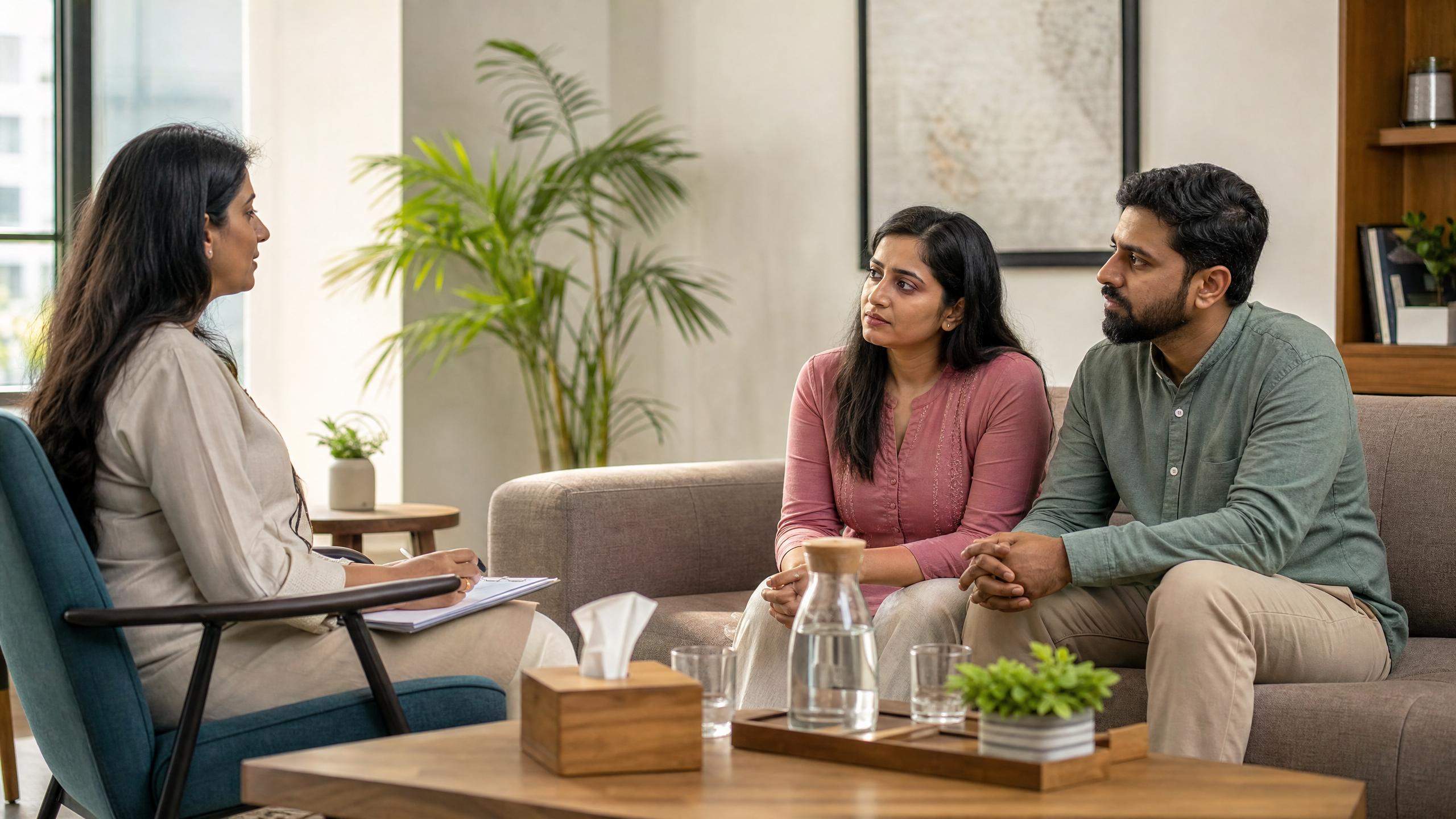
Marriage counselling is a valuable resource for couples navigating the complexities of their relationships. Whether you're considering starting therapy, are currently in the middle of the process, or wondering when it's time to stop, this comprehensive guide addresses the most common questions couples have about the marriage counselling journey. From understanding its effectiveness and stages to knowing when therapy may not be the right option, here are the answers to your most pressing FAQs.
How Effective Is Couple's Therapy?
Couples therapy, also known as marriage counseling is a form of psychotherapy designed to help couples improve their relationship and resolve conflicts. While couples therapy can help address various issues such as difficulties with communication, trust issues, etc., many couples still resist seeking couples therapy, doubting its effectiveness.
Understanding Couples Therapy
Simply put, couples therapy is a structured process where a trained therapist helps couples identify and address issues that are causing distress in their relationship. The goals of couples therapy typically include improving communication, resolving conflicts, increasing intimacy, and strengthening the overall relationship bond. A couples therapist provides the couples with a safe space to talk about their concerns while empowering them with various tools and techniques to overcome the issues at hand.
Does Couple's Therapy Really Work?
Yes, there is ample evidence to suggest that couples therapy can help address various issues. Research conducted in 2011 suggests that couples therapy benefits more than 70% of couples. The same research found that couples therapy can help address issues such as depression as well. Let's look at the effectiveness of couples therapy in depth.
Couple's Therapy's Impact On Overall Relationship
Numerous studies suggest that couples therapy can help address various issues, such as a lack of understanding and communication difficulties among partners. A study conducted in 2010 on the effectiveness of Emotionally Focused Therapy (EFT) on couples found that EFT can help improve trust, forgiveness and adjustment among couples while also reducing emotional difficulties.
Another study published in 2018 on the effectiveness of Gottman's method on couples found that Gottman's model can increase adjustment and intimacy among couples.
Couple's Therapy For Addictions
An analysis of a collection of studies published in 2022 suggests that couples therapy can help address substance use and addiction issues among couples. Another study indicates that couples therapy can cause a significant reduction in substance use while also bringing other positive results, such as increased relationship satisfaction, a reduction in partner violence, and better psychosocial development in children.
Couples Therapy And Post Traumatic Stress Disorder (PTSD)
In a study published in 2012, it was found that cognitive behavioural couples therapy can be an effective intervention in couples where one partner is diagnosed with PTSD. Couples therapy not only led to a reduction in the severity of PTSD symptoms but also increased relationship satisfaction.
Couples Therapy For Depression
A study published in 2018 on the effectiveness of couples therapy for depression found that couples therapy was as effective as individual therapy in addressing symptoms of depression. However, more research is required to reach firm conclusions.
Thus, research evidence suggests that couples therapy can be effective for multiple issues. However, the effectiveness of couples therapy depends on various factors.
Factors Influencing The Effectiveness Of Couple's Therapy
The effectiveness of couples therapy depends on various factors, such as:
- The commitment of both partners to the therapy process. Couples who are motivated to make changes are more likely to get positive outcomes from the process.
- The frequency and regularity of therapy sessions.
- The skills and experience of the therapist. A competent therapist can create a safe and supportive environment for couples to address their concerns and work towards positive changes.
- The complexity of the issues being addressed
- Early intervention can prevent issues from escalating and improve the chances of successful outcomes.
If you are considering couples therapy, click here to start your journey with Mind Voyage right away.
Should I Go To Couples Therapy With My Abusive Partner?
Couples therapy can be a useful tool for couples who want to address issues and improve their relationship. It can be extremely effective at improving communication, resolving conflict, and increasing overall relationship satisfaction. However, the presence of abuse can impact the relationship dynamics and the effectiveness of couples therapy in various ways. That is why, couples therapy is often not recommended when there is ongoing abuse in the relationship.
Understanding Abuse
Abuse in a relationship can take various forms, including physical, emotional, verbal, sexual, and financial abuse. The presence of abuse often creates a power imbalance in the relationship, leading to an unpleasant and unsafe atmosphere for the partner who is the victim of abuse.
Couples Therapy For Abusive Relationships
As mentioned earlier, couples therapy is not the best option and can even be ineffective if there is ongoing abuse in the relationship. This is because of various reasons, some of which are:
Lack Of Safety
Couples therapy aims to create a safe environment for both partners so that they can talk about their concerns openly. However, when someone is in an abusive relationship, there is always a risk of physical or psychological harm and violence based on something that is said in the couples therapy session. Thus, couples therapy may unintentionally end up proving to be a trigger for more abuse in the relationship.
Power Imbalance
Couples therapy works best when both partners treat each other with respect and show empathy and understanding towards each other's concerns and experiences, establishing equality. However, abusive relationships often have a power imbalance, where the abusive partner exerts control and dominates the victim.
Such power imbalances might show up in therapy sessions in various forms, where the abusive partner may dominate the conversation, interrupt the victim, dismiss their concerns, or shift blame onto them. With such harmful dynamics, it is usually impossible to make any real progress.
Accountability
One of the most important requirements for couples therapy to work is responsibility and accountability for both partners. However, in the case of most abusive relationships, the abuser is very unlikely to take any responsibility for their behaviour. Many times, they may only come to couples therapy expecting their partner to change. With such a lack of accountability, it is difficult to make progress.
Abuse Is Not A Relationship Problem
Couples therapy is most effective when both partners share responsibility for the issues being addressed. However, abusive behaviour is primarily an individual issue rooted in the behaviour and choices of the abuser, rather than a mutual problem within the relationship.
Can Couples Therapy Work For Abusive Relationships?
Although it's very rare, couples therapy can be helpful for abusive relationships only when the abusive partner is ready to take full accountability for their actions and demonstrates a genuine willingness to change.
What Are The Alternatives?
While couples therapy may not be the best option if your partner is abusive, there are certainly other sources of help that you can consider. They are:
Individual Therapy
Individual therapy can be helpful if you are in an abusive relationship. It can provide you with a safe environment to express yourself without fear of your partner and also help you develop skills to set boundaries and cope with the abuse in the relationship.
Support Groups
Joining a support group for survivors of abuse can provide valuable emotional support, validation, and coping strategies. These groups offer a sense of community and allow you to learn from others who have experienced similar challenges.
Crisis Helplines
Domestic violence and crisis helplines can provide immediate emotional support and help you with coping strategies or connect you with other relevant sources such as therapists, etc.
Can Your Couples Therapist Be Your Individual Therapist Too?
Have you ever considered seeking individual therapy from your couples therapist and wondered if this is possible? While it might seem convenient to open up to one trusted therapist regarding your individual and relationship struggles, having the same therapist for couples and individual therapy can cause various issues with confidentiality, trust and boundaries.
Understanding The Roles
First and foremost, it is important to understand that couples and individual therapists have completely different roles in therapy. An individual therapist works with a client independently, helping them address personal challenges, and emotional issues and work towards self-growth.
A couples therapist, on the other hand, works with both partners collaboratively and focuses on understanding and improving the relationship dynamics. They can help couples address conflicts, trust issues, etc. Most couples therapists typically treat the relationship as a client in this context.
When a therapist serves as both a couple and individual therapist, there could be a clash between these roles, leading to a risk of boundary violations and a major conflict of interest between the needs of individual partners vs their needs as a couple.
Issues With Confidentiality
Confidentiality is one of the most important ethical principles of both individual and couples therapy. Ensuring confidentiality can create an atmosphere of safety in the therapy room, allowing clients to open up without the fear of their privacy being breached. However, confidentiality can be a major concern when a couples therapist also doubles up as an individual therapist for one or both partners.
While therapists always try to maintain the confidentiality of their clients, it can be really difficult when a couples therapist sees one or both partners for individual therapy sessions.
Potential Loss Of Objectivity
Objectivity, neutrality or being unbiased, is one of the strengths of a therapist. Being unbiased and objective allows therapists to always look out for the best interests of their clients, be it a couple or an individual. However, a therapist who serves both as a couple's therapist and an individual therapist may face challenges in maintaining impartiality and being unbiased.
Sometimes, even if the therapist is unbiased, clients may end up thinking that the therapist is taking sides or favouring one partner over the other in couples therapy. This can lead to a loss of trust and impact the overall effectiveness of both couples and individual therapy.
Issues With Trust
Sometimes partners may not be comfortable seeing the couples therapist for individual sessions. This is because many people may feel uncomfortable about honestly sharing their concerns, knowing that the therapist is also going to see their partner in couples therapy. This discomfort can stem from concerns about confidentiality, trust, and the fear of how their disclosures may impact their couple's therapy sessions.
Due to the reasons mentioned above, most couples therapists refuse to work with one or both partners individually. However, a couples therapist may have a few individual sessions as a part of the couples therapy process, to get a deeper understanding of each partner's perspectives and concerns regarding the relationship.
What Are The Alternatives?
While it may not be a good idea for your couples therapist to double up as your individual therapist, there are always other options available for you to seek help. Some of them are:
Consider Having Different Therapists For Couple And Individual Work
Having a separate therapist for individual therapy can help you find a safe space for yourself and focus solely on your individual growth without having to worry about confidentiality or conflict of interest.
Collaborative Approach
Ask your individual therapist if they will be comfortable collaborating with your couples therapist and share relevant information (with your consent) to ensure continuity of care and a holistic understanding of the client's needs. This will also ensure that your individual and couples therapy moves in sync.
Should We Live Separately During Marriage Counselling?
Many couples might wonder if they should live separately while undergoing marriage counselling. The decision to live separately during marriage counseling is a complex one, as many factors might influence the decision and the decision might have both advantages and disadvantages.
The Advantages Of Living Separately During Marriage Counseling
It Gives Both Partners Space For Emotional Processing
Sometimes, when communication between partners breaks down, it can be emotionally overwhelming to be in the same space. In such situations, staying apart can help both partners feel emotionally calmer. It can also give both partners time to process feelings such as sadness, anger, and hurt that might arise as a result of relationship conflicts.
Reduced Conflict
When couples live together, there is a chance of smaller issues turning into bigger conflicts, leading to increased tensions. Living separately can sometimes, reduce this situation of tension and conflict and, in turn, create a calmer environment for addressing underlying issues during counseling sessions.
Space For Reflection
Living separately gives both partners time to reflect on the relationship dynamics and also reflect on their own needs from the relationship. Once both partners are clear about what they want from the relationship, they can set goals in counseling space accordingly. This clarity about the relationship can also motivate couples to build new foundations for their relationship.
Individual Growth
Living separately might allow both partners to focus on their personal growth and self-improvement. This can be valuable for addressing any individual issues or patterns of behaviour that may be contributing to relationship difficulties.
The Disadvantages Of Living Separately During Marriage Counseling
It Impacts The Effectiveness Of The Counselling Process
A lot of work in marriage counseling revolves around improving communication and interaction between the couple through homework exercises. But when couples live separately, they may miss out on opportunities to practice new communication skills. This might also make it challenging for the therapist to assess if the strategies discussed in sessions are effective in daily life situations. Thus, couples living separately might impact the overall effectiveness of the counselling process.
Emotional Distance
Physical separation can sometimes lead to emotional distance as well. Couples may struggle to maintain a sense of connection and intimacy while living apart, which can be harmful to the goals of the counselling process.
Practical Challenges
Living apart might lead to practical challenges such as issues with schedules, managing shared responsibilities, etc. All these issues can add to issues in the counselling process.
What To Consider While Living Separately During Counseling?
- Reflect on what both partners want to achieve by living apart. Is the goal to give each other some space or Is it to gain more clarity about the relationship? Having a common goal will help both partners.
- Consider the issues that partners are facing in the relationship, as specific challenges facing the relationship play a significant role in determining whether living separately is beneficial. For some couples, distance may provide a needed reprieve, while for others, it may hinder progress.
- Some couples may choose to involve their therapist in the discussion. The therapist can provide insights and recommendations based on their assessment of the situation and the dynamics observed during sessions.
When To Stop Going For Marriage Counselling?
Marriage counselling can help couples address issues with communication, intimacy, infidelity, etc. However, couples do not need to be in marriage counselling permanently. In fact, there are instances where couples can consider stopping their sessions with the therapist. Here are a few signs to know when you should stop marriage counselling.
Goals Are Met
Marriage counselling often comes to an end when the couple has achieved their set goals and the termination process has been completed. Termination in counselling is the concluding stage of your marriage counselling journey, and it marks the end of the program and the start of practicing what you have learned from all your sessions. Termination is important, as without it, the counselling process cannot end. After this, the couple might occasionally come to check in with their therapist and let them know how things are going.
The Couple Has Learned To Cope
If couples have learned to deal with their relationship issues in healthy ways outside of therapy too, then they may not need to seek professional help regularly. Also, over time, if the relationship experiences positive changes, increased understanding, and enhanced emotional connection, it may indicate that the counselling process has been successful. In such cases, marriage counselling may come to an end.
No Progress
Sometimes couples may feel that there is no progress in the relationship from either side after spending considerable time in marriage counselling. In such cases, they might want to discontinue the process. Instead of marriage counselling, individual therapy or group therapy might be helpful for some people.
Client-Counsellor Mismatch
The effectiveness of marriage counseling heavily depends on the client-counsellor relationship. However, not every therapist is right for every couple, so there are chances of a mismatch. This mismatch can occur due to many reasons. For example, sometimes a counsellor may fail to establish a rapport or therapeutic alliance with their client. If this happens, the couple may want to look for another counsellor who fits their needs better. A lack of rapport can make progress difficult, so early termination is an effective option in cases where a couple and therapist mismatch. Similarly, a lack of trust between the couple and the therapist can also be a reason for mismatch and termination.
Lack of Expertise
Every therapist has a specialization and expertise. Similarly, every couple has unique needs and requirements as well. Hence, there are chances that a therapist might lack the expertise to help a particular couple. For example, if a couple wants to address sexual concerns and intimacy issues but the therapist isn't knowledgeable enough or has a specialty in other issues, the counselling relationship may not work. In such cases, couples might want to consider looking for another therapist who can help them in better ways.
Conclusion
Marriage counselling can be an effective tool for couples navigating relationship challenges, with research showing it benefits over 70% of couples who pursue it. However, its effectiveness depends on factors such as commitment, timing, therapist expertise, and the nature of issues being addressed. While couples therapy is not recommended in cases of ongoing abuse, and having the same therapist for individual and couples work raises ethical concerns, there are many ways couples can make the most of the counselling process. Whether you're deciding to live separately during therapy or considering when to end your sessions, the decision should always be made mutually, ideally with input from your therapist. Ultimately, the goal of marriage counselling is to equip couples with the tools they need to build a healthier, stronger relationship—whether that journey continues in therapy or beyond it.
References
- Barbato, A., D'Avanzo, B., & Parabiaghi, A. (2018). Couple therapy for depression. The Cochrane Database of Systematic Reviews, 2018(6), CD004188. https://doi.org/10.1002/14651858.CD004188.pub3
- Can Couples Therapy Work in Abusive Relationships? (2015, August 27). Psych Central. https://psychcentral.com/relationships/why-couples-counseling-doesnt-work-in-abusive-relationships
- Can a Therapist See a Couple Individually? | Well+Good. (n.d.). Retrieved May 2, 2024, from https://www.wellandgood.com/can-therapist-see-couple-individually/
- Can You Do Couples Therapy While Separated? (n.d.). Retrieved March 25, 2024, from https://www.verywellmind.com/benefits-of-couples-therapy-while-separated-4161245
- Counseling, A. (2014, June 2). Sometimes Fighting For Your Marriage Means Separating. Avenues Counseling. https://avenuescounselingcenter.org/sometimes-fighting-marriage-means-separating/
- Counseling While Separated Might Just Save Your Relationship. (2019, September 13). Marriage Advice – Expert Marriage Tips & Advice. https://www.marriage.com/advice/counseling/counseling-while-separated/
- Couples and Marriage Counselling. (n.d.). Psychology India Magazine. Retrieved March 1, 2024, from https://psychology.net.in/specialities/couples-and-marriage-counselling/
- Couple therapy in the 2020s: Current status and emerging developments. (n.d.). Family Process. Retrieved March 20, 2024, from https://onlinelibrary.wiley.com/doi/full/10.1111/famp.12824
- Couples Therapy—An overview | ScienceDirect Topics. (n.d.). Retrieved March 20, 2024, from https://www.sciencedirect.com/topics/psychology/couples-therapy
- Does Marriage Counseling Work? (n.d.). Verywell Mind. Retrieved March 20, 2024, from https://www.verywellmind.com/does-marriage-counseling-work-2300428
- Does my therapist do couples therapy? | BetterHelp. (n.d.). Retrieved May 2, 2024, from http://www.betterhelp.com
- Examining the Effectiveness of Gottman Couple Therapy on Improving Marital Adjustment and Couples' Intimacy. (n.d.). Retrieved March 20, 2024, from https://www.ncbi.nlm.nih.gov/pmc/articles/PMC6037577/
- Fals-Stewart, W., O'Farrell, T. J., & Birchler, G. R. (2004). Behavioral Couples Therapy for Substance Abuse: Rationale, Methods, and Findings. Science & Practice Perspectives, 2(2), 30–41.
- GoodTherapy | Can I Talk to Our Couples Therapist without… (n.d.). Retrieved May 2, 2024, from https://www.goodtherapy.org/blog/faq/can-i-talk-to-our-couples-therapist-without-my-partner-being-present
- Halchuk, R., Makinen, J., & Johnson, S. (2010). Resolving Attachment Injuries in Couples Using Emotionally Focused Therapy: A Three-Year Follow-Up. Journal of Couple & Relationship Therapy, 9, 31–47. https://doi.org/10.1080/15332690903473069
- Knerr, M., Bartle-Haring, S., McDowell, T., Adkins, K., Delaney, R. O., Gangamma, R., Glebova, T., Grafsky, E., & Meyer, K. (2011). The Impact of Initial Factors on Therapeutic Alliance in Individual and Couples Therapy. Journal of Marital and Family Therapy, 37(2), 182–199. https://doi.org/10.1111/j.1752-0606.2009.00176.x
- McCrady, B. S., Wilson, A. D., Muñoz, R. E., Fink, B. C., Fokas, K., & Borders, A. (2016). Alcohol-Focused Behavioral Couple Therapy. Family Process, 55(3), 443–459. https://doi.org/10.1111/famp.12231
- Research on the Treatment of Couple Distress. (n.d.). Journal of Marital and Family Therapy. Retrieved March 20, 2024, from https://onlinelibrary.wiley.com/doi/10.1111/j.1752-0606.2011.00249.x
- Roscioli, L. (2021, March 12). Living Apart Together: A Couples Counsellor On Living Separately from Your Partner. The Latch. https://thelatch.com.au/living-apart-together-advice/
- Termination in Counseling and How to Move Forward | Marriage.com. (2019, February 1). Marriage Advice – Expert Marriage Tips & Advice. https://www.marriage.com/advice/therapy/termination-in-counseling/
- What Is Couples Counseling? (n.d.). Verywell Health. Retrieved March 20, 2024, from https://www.verywellhealth.com/couples-counseling-5205837
- Why Couples Therapy Doesn't Work For People In Abusive Relationships With Narcissists. (2019, September 28). Psych Central. https://psychcentral.com/blog/recovering-narcissist/2019/09/why-couples-therapy-doesnt-work-for-people-in-abusive-relationships-with-narcissists