
 Rasika Karkare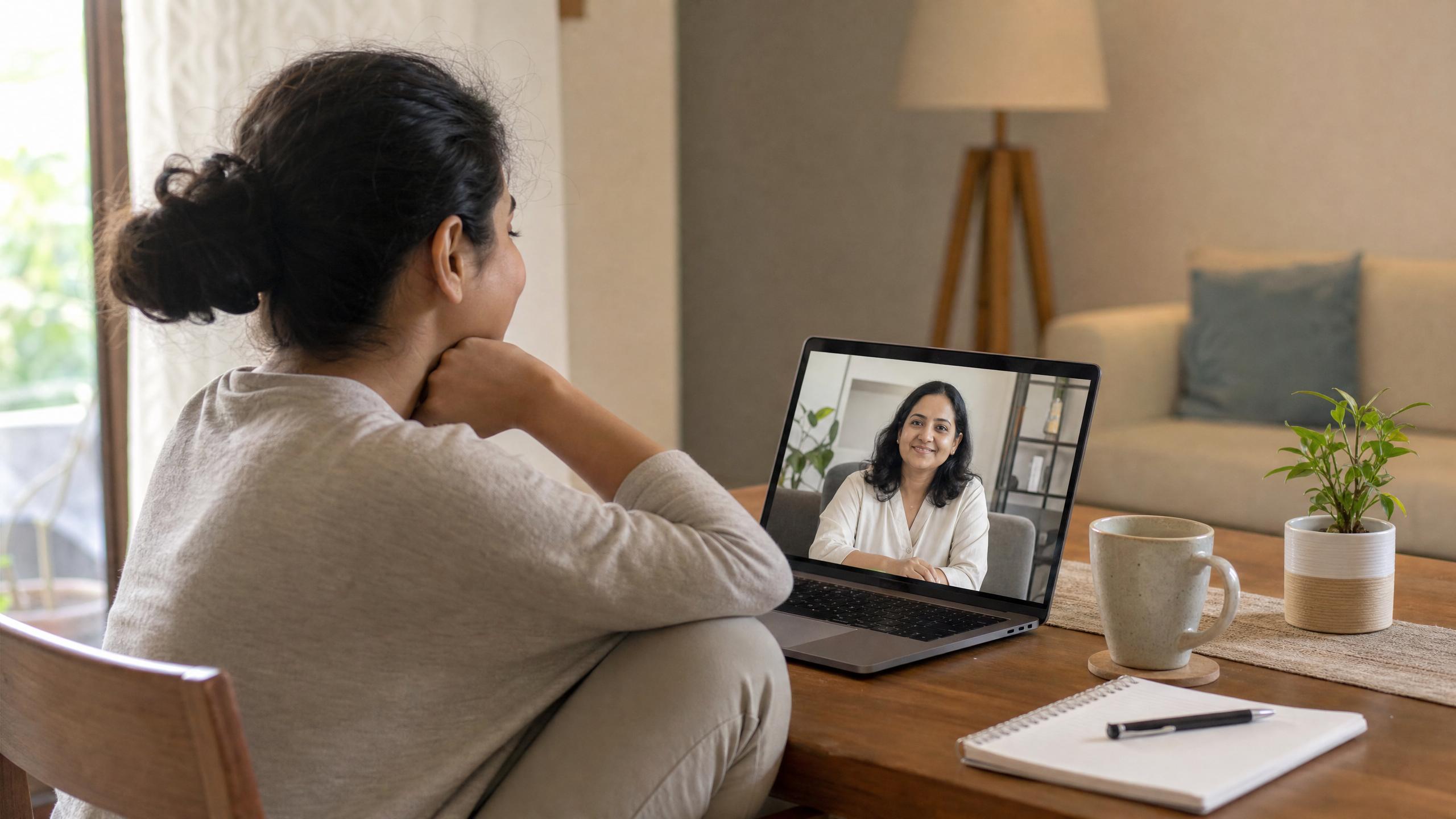
As online therapy continues to grow in popularity, many people have questions about how it works, whether it's safe, and what to expect. From understanding the effectiveness of couples therapy to concerns about privacy, recordings, and insurance coverage, this comprehensive guide addresses the most common questions about the online therapy process.
How Effective Is Couple's Therapy?
Couples therapy, also known as marriage counseling is a form of psychotherapy designed to help couples improve their relationship and resolve conflicts. While couples therapy can help address various issues such as difficulties with communication, trust issues, etc., many couples still resist seeking couples therapy, doubting its effectiveness. Let's look at the research on couples therapy and find out if it's really effective.
Understanding Couples Therapy
Simply put, couples therapy is a structured process where a trained therapist helps couples identify and address issues that are causing distress in their relationship. The goals of couples therapy typically include improving communication, resolving conflicts, increasing intimacy, and strengthening the overall relationship bond. A couples therapist provides the couples with a safe space to talk about their concerns while empowering them with various tools and techniques to overcome the issues at hand.
Does Couple's Therapy Really Work?
Yes, there is ample evidence to suggest that couples therapy can help address various issues. Research conducted in 2011 suggests that couples therapy benefits more than 70% of couples. The same research found that couples therapy can help address issues such as depression as well. Let's look at the effectiveness of couples therapy in depth.
Couple's Therapy's Impact On Overall Relationship
Numerous studies suggest that couples therapy can help address various issues, such as a lack of understanding and communication difficulties among partners. A study conducted in 2010 on the effectiveness of Emotionally Focused Therapy (EFT) on couples found that EFT can help improve trust, forgiveness and adjustment among couples while also reducing emotional difficulties.
Another study published in 2018 on the effectiveness of Gottman's method on couples found that Gottman's model can increase adjustment and intimacy among couples.
Couple's Therapy For Addictions
An analysis of a collection of studies published in 2022 suggests that couples therapy can help address substance use and addiction issues among couples. Another study indicates that couples therapy can cause a significant reduction in substance use while also bringing other positive results, such as increased relationship satisfaction, a reduction in partner violence, and better psychosocial development in children.
Couples Therapy And Post Traumatic Stress Disorder (PTSD)
In a study published in 2012, it was found that cognitive behavioural couples therapy can be an effective intervention in couples where one partner is diagnosed with PTSD. Couples therapy not only led to a reduction in the severity of PTSD symptoms but also increased relationship satisfaction.
Couples Therapy For Depression
A study published in 2018 on the effectiveness of couples therapy for depression found that couples therapy was as effective as individual therapy in addressing symptoms of depression. However, more research is required to reach firm conclusions.
Thus, research evidence suggests that couples therapy can be effective for multiple issues. However, the effectiveness of couples therapy depends on various factors.
Factors Influencing The Effectiveness Of Couple's Therapy
The effectiveness of couples therapy depends on various factors, such as:
- The commitment of both partners to the therapy process. Couples who are motivated to make changes are more likely to get positive outcomes from the process.
- The frequency and regularity of therapy sessions.
- The skills and experience of the therapist. A competent therapist can create a safe and supportive environment for couples to address their concerns and work towards positive changes.
- The complexity of the issues being addressed
- Early intervention can prevent issues from escalating and improve the chances of successful outcomes.
In summary, there is a lot of evidence to suggest that couples therapy can be effective for improving relationships and resolving conflicts. However, the effectiveness of the process depends on various factors, such as the timing of the intervention, the expertise of the therapist, and the commitment of both partners. If you are considering couples therapy, click here to start your journey with Mind Voyage right away.
Is Online Therapy Safe?
In recent years, online therapy has been gaining popularity due to its convenience and accessibility compared to traditional in-person therapy. However, many people may still resist online therapy, raising doubts over its effectiveness and safety. Let's explore whether online therapy is a safe option.
Understanding Privacy And Confidentiality
Privacy and confidentiality are the most important aspects of therapy, regardless of whether it happens in an online or offline space. In fact, confidentiality creates trust, which is an essential foundation for an effective therapeutic relationship. Most therapy platforms use encryption and secure servers to protect client information.
Apart from that, online therapy platforms or even individual therapists are required to follow the rules and regulations of ethical practice. These rules and regulations are set by either a governing body like the American Psychological Association (APA) or are a part of the organization's code of conduct. Thus, most therapists are likely to inform clients about confidentiality and its limitations in the first session.
Understanding Limitations To Confidentiality
While therapists are ethically obligated to protect their client's confidentiality, there are exceptions to this rule as well. These exceptions to confidentiality are discussed in the first session, along with confidentiality. Confidentiality is limited in situations where a client is in danger or can harm someone else. Confidentiality can also be broken in cases involving child abuse. These exceptions to confidentiality ensure that the client and others around them are safe and protected.
Guidelines For Therapists Practicing Online
The American Psychological Association (a regulatory body for psychologists in America) has published a guideline for online therapy. Every therapist is required to adhere to these guidelines. Most online therapy in India also have similar guidelines. They are:
- Psychologists must ensure that client data remains confidential and secure. They are required to take adequate security measures for the same.
- Psychologists must ensure that they address data, security and confidentiality concerns in their informed consent form to ensure that clients are well informed.
- Psychologists must ensure that they take adequate security measures before disposing of any client data, if and when required.
- Psychologists must have strong passwords, encryption and other security measures to protect client data.
How To Ensure That Online Therapy Is Safe?
While it is the legal and ethical responsibility of a psychologist and therapy platform to provide safe and confidential therapy to clients, there are some steps that clients can take to ensure that they have a safe therapy experience. They are:
- Ask your therapist questions about safety, confidentiality and documentation. Most therapists will be comfortable answering questions about confidentiality.
- Read the informed consent form carefully before submitting
- Read the privacy policy of a therapy platform before submitting informed consent
- Ensure your device has adequate safety measures, such as anti-virus protection.
Online therapy can be a safe and effective option for people seeking mental health support, as therapists and therapy platforms are required to follow guidelines for confidentiality and ethical practice. Clients can ensure a safe therapy experience by reading privacy policies, reading informed consent and having an open discussion regarding privacy and confidentiality with their therapists.
Are Online Therapy Sessions Recorded?
One question that people commonly ask before starting online therapy is, "Will the sessions be recorded?" Sometimes the doubts and concerns about being recorded may even discourage people from seeking help. Let's explore if online therapy sessions are recorded.
Understanding Online Therapy
Online therapy, or teletherapy, is when therapy sessions are provided through online means such as video calls, texts, chats or emails. Live video sessions are the most common form of online sessions. Live video sessions are the most researched and effective form of online therapy as well. Online therapy allows people to access counselling and support from trained therapists remotely, without the need for in-person visits.
Recording Of Sessions
Client privacy and confidentiality are an integral part of therapy, regardless of whether it is conducted online or offline. All therapists and therapy platforms are required to follow certain guidelines set by the organization or the regulatory body, hence, all therapists practising online are obligated to protect client confidentiality.
Online therapy sessions are generally not recorded. This helps the clients feel safe and comfortable while sharing their concerns. However, there may be times or situations where it is necessary to record sessions, but this is only done if there is a prior agreement between the client and the therapist. Also, sessions are recorded only for specific purposes and stored in secure folders and files.
Some Situations Where Sessions May be Recorded
Legal Issues
Sometimes, recording of sessions may be required in case a client is involved in a legal issue. This is especially possible when there are concerns about self-harm or harm to others. However, even in such situations, therapists are required to inform clients about the same and take all measures to ensure that the confidentiality of the client remains intact.
For Training Purposes
All therapists are ethically required to be under supervision. That is, they are required to seek guidance from a senior therapist. This is important so that the quality of their work continues to improve. Sometimes, therapists might be required to record sessions for training and supervision purposes. These recordings are typically used for educational purposes, allowing supervisors to provide therapists with feedback.
Sometimes therapists may record sessions so that they can watch their work and reflect on it. This allows them to review their work and gain deeper insights into the issues discussed and the progress made in therapy. However, all this is done only with the prior consent of the client, with the client having full rights to decline the request for recording.
Safety And Security
Even when sessions are recorded, therapists are required to store the recorded content with appropriate confidentiality. This includes using secure platforms for recording, storing recordings securely, and obtaining consent from clients regarding the storage and usage of recorded sessions.
What To Do If A Therapist Or Therapy Platform Wants To Record Sessions?
Recording can be uncomfortable, as most clients share a lot of sensitive and personal information during their sessions. Here are some steps you can take if your therapist wants to record sessions:
- Read the privacy policy and informed consent of the therapy platform before giving consent for recording
- Ask your therapist questions regarding the purpose and usage of recordings. Also, ask who would be allowed to access the recorded files.
- Reflect and think about your comfort and how you feel about the sessions being recorded before making a decision. Remember to prioritize your comfort.
In summary, online therapy sessions are not recorded until there is explicit consent from the client. Therapists prioritize client privacy and confidentiality, and any recording of sessions is done with informed consent and for specific purposes such as legal requirements or training and supervision. Ultimately, client comfort matters most, so clients have full control and the right to decide how their personal information is recorded and used.
Does Insurance Cover Online Therapy In India?
In recent years, the landscape of mental health has been changing in India with the rise in mental health awareness. People in India are now aware of and, more importantly, willing to seek help for mental health issues. This has led to increased demand for online therapy services. However, a common question is whether insurance covers online therapy in India. The answer to this question is a complicated one. Let's explore it.
The Need For Mental Health Coverage In India
Mental health has always been a huge challenge in India. A recent report published by "The Economic Times" suggests that almost 60-70 million people in India suffer from common mental health disorders. The same report also suggests almost 1 in 5 people in India suffer from some form of mental illness or symptoms. Additionally, financial barriers are one of the main reasons why people avoid seeking help at the right time. Thus, it is crucial to cover mental health in insurance policies so that people have the options and means to seek help.
Insurance Coverage And Mental Health in India
For the longest time, health insurance plans in India were only focused on physical health issues. However, there has been a positive change in recent years, particularly after the Mental Healthcare Act of 2017. This act makes it compulsory for every health insurance provider to add mental health coverage to their insurance plans. Apart from that, the Insurance Regulatory and Development Authority (IRDA) has also mandated all insurance companies to prepare specific insurance plans dedicated to mental health and mental illness coverage.
What Do Insurance Plans Cover?
Most insurance policies in India will cover the following expenses for mental health issues:
- The insurance policy will cover treatments for all major mental health conditions, such as anxiety, depression, psychosis, and schizophrenia
- Hospitalization and outpatient treatment
- Some plans may cover the costs of medications
- Some plans cover costs for counselling and psychotherapy as well
The Challenges of Mental Health Coverage in India
While some plans may provide cover for mental health issues, there are many challenges related to mental health coverage in India. They are:
- The coverage for mental health services depends on specific plans. For instance, some plans may provide coverage only for hospitalization, while others may provide coverage for both inpatient and outpatient services.
- Some plans may provide coverage only for medication, while others may provide coverage for both therapy and medications
- Additionally, policies also have a waiting period for mental health coverage. The waiting period is a specific amount of time a person has to wait before they can access the benefits of their insurance.
- A few policies also have set limits on the amount they can allot for mental health coverage
- Not all mental health professionals will accept insurance plans.
Thus, there are a lot of complexities involved when it comes to mental health coverage in India.
How To Know If Your Policy Covers Online Therapy Charges?
Read The Policy Documents
Carefully read the policy documents, including the section on mental health coverage, to understand if the plan provides coverage for online therapy.
Contact The Insurance Provider
Reach out to the insurance provider directly to inquire about coverage specifics for mental health services, including online therapy.
The answer to whether insurance covers online therapy in India is a complex one as it depends on various factors, such as the insurance provider, policy type, coverage of policies and mental health professionals as well. Thus, it is advisable to read policy documents and reach out directly to insurance providers to know if a plan covers online therapy.
References
Barbato, A., D'Avanzo, B., & Parabiaghi, A. (2018). Couple therapy for depression. The Cochrane Database of Systematic Reviews, 2018(6), CD004188. https://doi.org/10.1002/14651858.CD004188.pub3
Care Health Insurance. (n.d.). Does your insurance cover mental therapy? Retrieved March 27, 2024, from https://www.careinsurance.com/blog/health-insurance-articles/does-my-insurance-cover-therapy
Dubey, N. (2021, August 12). Is treatment for mental health covered by insurance policies? Mint. https://www.livemint.com/money/personal-finance/is-treatment-for-mental-health-covered-by-insurance-policies-11628709796684.html
Fals-Stewart, W., O'Farrell, T. J., & Birchler, G. R. (2004). Behavioral couples therapy for substance abuse: Rationale, methods, and findings. Science & Practice Perspectives, 2(2), 30–41.
Halchuk, R., Makinen, J., & Johnson, S. (2010). Resolving attachment injuries in couples using emotionally focused therapy: A three-year follow-up. Journal of Couple & Relationship Therapy, 9, 31–47. https://doi.org/10.1080/15332690903473069
HuffPost. (2020, September 23). Is it OK to record your therapy sessions? https://www.huffpost.com/entry/record-therapy-sessions-ok_l_5f6a13c5c5b6968b276fb61f
Jain, D. R. (2023, October 10). World Mental Health Day: 60-70 mn people in India suffer from common mental disorders; stigmatisation & financial barriers prevent timely treatment. The Economic Times. https://economictimes.indiatimes.com/magazines/panache/world-mental-health-day-60-70-mn-people-in-india-suffer-from-common-mental-disorders-stigmatisation-financial-barriers-prevent-timely-treatment/articleshow/104289268.cms?from=mdr
Knerr, M., Bartle-Haring, S., McDowell, T., Adkins, K., Delaney, R. O., Gangamma, R., Glebova, T., Grafsky, E., & Meyer, K. (2011). The impact of initial factors on therapeutic alliance in individual and couples therapy. Journal of Marital and Family Therapy, 37(2), 182–199. https://doi.org/10.1111/j.1752-0606.2009.00176.x
Lebow, J. (2022). Couple therapy in the 2020s: Current status and emerging developments. Family Process. https://onlinelibrary.wiley.com/doi/full/10.1111/famp.12824
Lebow, J. (2012). Research on the treatment of couple distress. Journal of Marital and Family Therapy. https://onlinelibrary.wiley.com/doi/10.1111/j.1752-0606.2011.00249.x
ManipalCigna. (n.d.). How much of mental health is covered in health insurance? Retrieved March 27, 2024, from https://www.manipalcigna.com/blog/mental-health-covered-in-health-insurance
McCrady, B. S., Wilson, A. D., Muñoz, R. E., Fink, B. C., Fokas, K., & Borders, A. (2016). Alcohol-focused behavioral couple therapy. Family Process, 55(3), 443–459. https://doi.org/10.1111/famp.12231
National Center for Biotechnology Information. (n.d.). Examining the effectiveness of Gottman couple therapy on improving marital adjustment and couples' intimacy. Retrieved March 20, 2024, from https://www.ncbi.nlm.nih.gov/pmc/articles/PMC6037577/
Policybazaar. (n.d.). Does health insurance cover psychological disorders? Retrieved March 27, 2024, from https://www.policybazaar.com/health-insurance/individual-health-insurance/articles/does-health-insurance-cover-psychological-disorders/
PolicyX. (n.d.). Mental illness coverage—How much is covered in health insurance? Retrieved March 27, 2024, from https://www.policyx.com/health-insurance/articles/mental-illness-covered-in-a-health-insurance/
ScienceDirect. (n.d.). Couples therapy—An overview. Retrieved March 20, 2024, from https://www.sciencedirect.com/topics/psychology/couples-therapy
Society for the Advancement of Psychotherapy. (n.d.). The role of recording in psychotherapy. Retrieved March 22, 2024, from https://societyforpsychotherapy.org/ask-the-ethicist-the-role-of-recording-in-psychotherapy/
American Psychological Association. (n.d.). Guidelines for the practice of telepsychology. Retrieved March 22, 2024, from https://www.apa.org/practice/guidelines/telepsychology
Verywell Health. (n.d.). What is couples counseling? Retrieved March 20, 2024, from https://www.verywellhealth.com/couples-counseling-5205837
Verywell Mind. (n.d.). Does marriage counseling work? Retrieved March 20, 2024, from https://www.verywellmind.com/does-marriage-counseling-work-2300428
Verywell Mind. (n.d.). Security, ethics, and legal issues in online therapy. Retrieved March 22, 2024, from https://www.verywellmind.com/online-therapy-ethics-2795227