
 Rasika Karkare
Indian Celebrities with Mental Health Struggles
While India still has a long way to go before the stigma related to mental health issues can be labelled a thing of the past, in recent times the mental health awareness movement has been gaining traction. Many individuals have taken to the internet to open up about their mental health struggles, and so have some famous Indian personalities.
In addition to dispelling myths and misinformation about mental illnesses, sharing personal accounts of such struggles, whether in conversations or on social media, makes for a great tool for tackling stigma. When it comes to spreading awareness, as helpful as it is to share personal experiences of mental health struggles, it is also important to acknowledge the courage it takes to open up about such a deeply personal adversity.
Needless to say, celebrities have quite an influence on the masses. This is why, when Indian celebrities address the stigma surrounding mental illnesses or share their own experiences, it helps amplify today's mental health revolution. The unfortunate demise of Sushant Singh Rajput, who was suffering from Bipolar Disorder, has catalyzed more conversations about mental health across platforms.
Here are some Indian celebrities who have struggled with mental health issues:
Ileana D'Cruz

"Giles at KOOVS fashion show in New Delhi" (CC BY-NC-ND 2.0) by UK in India
In her interview with MissMalini, the Bollywood actress opened up about her struggle with Body Dysmorphic Disorder, anxiety, and depression. Recalling her experience, she says, "I used to sit in the corner and cry for hours. I think it's important for everybody to get themselves checked – mental health is very important. Anxiety has been a big problem for me, but I think my biggest struggle has been depression."
Anushka Sharma

"Anushka Sharma" (CC BY-SA 2.0) by chocobos
The actress took to Twitter to share her experience and de-stigmatize her mental health struggles. She posted on Twitter: "I have anxiety. And I'm treating my anxiety. I'm on medication for my anxiety. Why am I saying this? Because it's a completely normal thing. It's a biological problem. In my family, there have been cases of depression. More and more people should talk openly about it. There is nothing shameful about it or something to hide."
Deepika Padukone

"Happy New Year" (CC BY 2.0) by piyush.k
After experiencing depression during a seeming "professional high," the actress has been vocal about her own battle with mental illness and has since geared efforts towards supporting others who suffer similarly by establishing The Live, Love, Laugh Foundation. Aimed at reducing stigma and spreading awareness, it also serves as a platform to connect to mental health professionals.
Honey Singh

"SLAMtheTour_20Sep2014_(237)" (CC BY 2.0) by lauraleedooley
After his sudden disappearance from the limelight, the singer revealed his struggle with Bipolar Disorder and Alcohol addiction in an interview. While sharing his own experience with the mental illness, he said, "The truth is, I was suffering from bipolar disorder. It went on for 18 months, during which I changed four doctors, the medication wasn't working on me, and crazy things were happening. After the sun went down, I was scared of my own family. I wasn't behaving like myself. I was a sick person. I wasn't in my own control. But now it is all behind me, and I've come out of it."
Karan Johar

"The Duke and Duchess of Cambridge in Mum" (CC BY-NC-ND 2.0) by UK in India
The popular filmmaker, in an interview, opened up about his battle with depression. "There was a phase in my life when I was really depressed. When I went through that phase, I thought I was having a cardiac arrest. I felt it in the middle of a meeting two and half years ago, after which I left the meeting in between, saying I had something urgent to do, and rushed to the doctor. He then said I am having an anxiety attack. I went to a psychologist about that." He also said, "Those sessions (medication) made a big difference to me. During those sessions, we touched on many aspects of my life."
Cricketers Who Opened Up About Their Mental Health Issues
Cricket is one of the most watched and loved sports in the world, not just in India. It is also regarded as one of the most physically and mentally taxing sports. Cricketers have always been vocal about their physical fitness, but the impact of international cricket on mental health is often overlooked. This trend has shifted significantly in recent years, with several prominent players coming forward to discuss their struggles with mental health issues. Let us take a look at a few players who have spoken about their mental health issues:
Virat Kohli
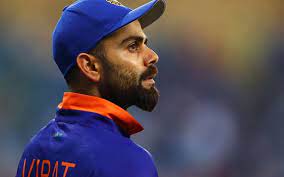
For more than a decade, Virat Kohli has been regarded as one of the best players in the world. His journey, however, has not been easy. Virat opened up about his mental health struggles after returning from a break in 2022. In an interview with Star Sports, he said that he had been trying hard to fake his intensity, even though he was feeling mentally down, and that he was in need of a break. A month of rest and introspection helped him feel refreshed. He has been playing at his peak ever since.
Praveen Kumar
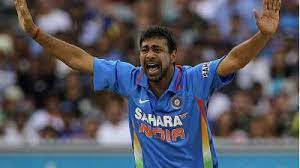
Praveen Kumar is a fast bowler who represented India in 84 matches between 2007 and 2012. In January 2020, Parveen opened up about how his mental health had worsened to the point where he wanted to end his life. However, Praveen was able to calm himself when he saw a picture of his smiling children. This incident prompted him to seek therapy. He was subsequently diagnosed with depression. He has managed to overcome the difficult phase and is aspiring to be a coach in the future.
Ben Stokes
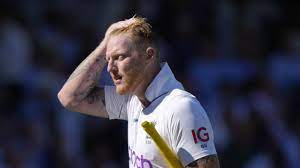
Ben Stokes is one of the best all-rounders and the current captain of the England Test team. In July 2021, Stokes decided to take an indefinite break from cricket to prioritize his mental well-being. He later revealed that he had gone through a series of panic attacks before finally deciding to step away from the game. He was able to make a successful return to the team after six months. He continued to be on medication for anxiety after his return.
Jonathan Trott
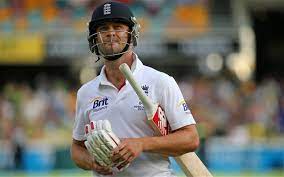
Jonathan Trott was one of England's most promising batsmen who battled mental health issues at the peak of his career. In 2013, Trott decided to leave an important international series due to severe stress. He took a 16-month break from cricket after that incident. He tried to make a comeback to the team in 2015 but ultimately decided to retire from international cricket due to his long-standing battle with anxiety disorder. He has been coaching the Afghanistan cricket team since 2022.
Glenn Maxwell
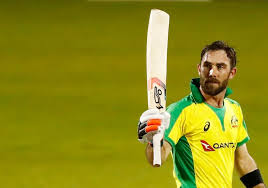
Glenn Maxwell is an Australian all-rounder famous for his six-hitting abilities. Maxwell decided to take a break from cricket in October 2019, citing mental health concerns. He later revealed that he had been struggling and trying to 'fake it' for the last 18 months before deciding to step away. Eventually, he was diagnosed with mild anxiety and depression. Maxwell has overcome his difficulties and is now playing for Australia in the 2023 World Cup.
Not just cricketers, but many sports persons across all sports seek help from sports psychologists. The stories shared by these well-known cricketers not only help to raise awareness but also help to break down the stigma associated with seeking help for mental health issues. If more cricketers continue to share their stories, it may spark more discussions about mental health in the country.
Media Representation of Mental Health
Media sources such as movies, TV shows and news channels are a great source of knowledge and even entertainment. However, these sources of media also have the power to influence our opinions on various topics. One of the most important topics being heavily discussed in the media is mental health. Even though the media can be a great source for promoting mental health awareness, the majority of media resources seem to show mental health and related issues in a negative light.
Media And The Negative Portrayal Of Mental Health
Media portrayal can influence one's perception of mental illnesses. Media influence can also override personal experiences about how mental illnesses are viewed. The media can perpetuate the negative stereotypes associated with mental illnesses.
Very often, people with mental illnesses are depicted with negative attributes such as being unlikable, dangerous, aggressive, violent, asocial, untrustworthy and incompetent. Labelling people with mental illnesses as dangerous and violent reinforces the public's view of fear and anxiety toward the mentally ill. Even newspapers, which are another important source of information, have published articles promoting stereotypes about mental health.
The impact that social media has on people can be multi-fold as well. Social media sites such as Facebook and Instagram have pages named 'Psychology Facts'. Such pages post facts related to mental health, but without any authentic or credible resources, people follow and believe these facts. Needless to say, this leads to misguiding people. These social media pages have also been coming up with new terms related to mental health or illnesses and encouraging people to use such terms. This is, however, not right, as people casually use these terms and fail to realize the seriousness of such terms.
Nowadays, people tend to look up and search for symptoms and disorders on the internet. This tendency to Google one's symptoms without consulting a trained mental health professional can contribute to a lot of stigma and misinformation around mental health. This inaccurate information often causes more harm than good.
Apart from social media, Bollywood movies too, have been showing psychiatrists, psychologists and other mental health professionals in a negative light, particularly in the 1990s. For example, in movies such as Damini (1990) and Dilwale (1994), psychiatrists were depicted as either unprofessional or even used for comedic purposes. Such portrayals only contribute to the existing negative stereotypes about mental health and mental health professionals.
A Change In Trend
In recent years, the media's depiction of mental health issues has been changing towards positivity. Since the death of Bollywood actor Sushant Singh Rajput by suicide, the news media in particular have been encouraging people to talk openly about mental health issues. Deepika Padukone, another Bollywood actress, has been vocal about her battle with depression. Her open dialogue about her struggle has also prompted the media to pay attention to mental health issues.
A 2016 Bollywood movie, Dear Zindagi, starring prominent actors Alia Bhatt and Shahrukh Khan, also talks openly about concepts of depression and therapy. Such positive and, more importantly, realistic depictions of mental health will only help to increase mental health awareness.
In Western cinema too, personal accounts of patients and sensitive depictions in movies like "As Good As It Gets" have attempted to deliver a fairly accurate image of psychiatric illnesses and their sufferers. Some movies, such as "A Beautiful Mind," have portrayed serious psychotic disorders such as schizophrenia in a good and interesting way too.
Similar to India, the media portrayal of psychiatrists and other mental health professionals might not have always been positive in the West as well. They were quite often portrayed as neurotic, unable to maintain professional boundaries, substance users, rigid, controlling, ineffectual, uncaring, self-absorbed or mentally unstable. However, in a few films like Good Will Hunting (1997), Ordinary People (1980) and Shutter Island (2010), psychiatrists have been depicted positively.
Conclusion
The media and its negative portrayal of mental health can have a major negative impact on mental illnesses. The stigma that arises due to negative media reporting can impair self-confidence, impede recovery and create barriers to seeking treatment. People who suffer from a mental illness may internalize negative references and develop avoidant coping mechanisms that become obstacles to treatment. Experiences of discrimination and violence can also result in psychological distress. Additionally, inaccurate portrayals of mental illnesses in films may have a range of adverse effects, such as promoting inaccurate knowledge in society and leading to misunderstandings. Thus, we, as people, need to make sure that we get knowledge about mental health only from trustworthy and authentic sources.
References
Battling with mental health issues, Ben Stokes reveals he takes anxiety drugs. (2022, August 23). Mint. https://www.livemint.com/sports/cricket-news/battling-with-mental-health-issues-ben-stokes-reveals-he-takes-anxiety-drugs-11661244655089.html
Ex-India Cricketer Praveen Kumar, Who Survived Car Crash, Once Tried to Kill Himself. (n.d.). Zee News. Retrieved October 11, 2023, from https://zeenews.india.com/cricket/ex-india-cricketer-praveen-kumar-who-survived-car-crash-once-tried-to-kill-himself-2631266.html
Ganesh, K. (2011). Knowledge and attitude of mental illness among general public of Southern India. National Journal, 2, 175-8.
Grinfeld, M. J. (1998). Psychiatry and mental illness: Are they mass media targets. Psychiatric Times, 15, 1.
How Bollywood gets portrayal of mental health professionals wrong. (n.d.). The Week. Retrieved February 29, 2024, from https://www.theweek.in/news/entertainment/2022/09/07/how-bollywood-gets-portrayal-of-mental-health-issues-psychiatrists-wrong.html
'I was mentally and physically ruined'—Glenn Maxwell. (n.d.). ESPNcricinfo. Retrieved October 11, 2023, from https://www.espncricinfo.com/story/i-was-mentally-and-physically-ruined-glenn-maxwell-1209928
Padhy, S. K. (2014). Media portrayal of mental illnesses. Journal of Postgraduate Medicine, 60(2), 163-170. https://www.jpgmonline.com/article.asp?issn=0022-3859;year=2014;volume=60;issue=2;spage=163;epage=170;aulast=Padhy
Prasad, C. G., Babu, G. N., Chandra, P. S., & Chaturvedi, S. K. (2009). Chitrachanchala (pictures of unstable mind): Mental health themes in Kannada cinema. International Review of Psychiatry, 21, 229-33.
Sharma, V. (2020, August 28). 5 Popular Cricketers who have faced Mental health issues in the past. KhelTalk. https://kheltalk.com/for-the-record/5-popular-cricketers-who-have-faced-mental-health-issues-in-the-past/
Swaminath, G., & Bhide, A. (2009). 'Cinemadness': In search of sanity in films. Indian Journal of Psychiatry, 51, 244-6.
Virat Kohli To Simone Biles – Athletes Who Battled Mental Health Issues. (2022, October 19). Outlook India. https://www.outlookindia.com/sports/virat-kohli-to-simone-biles-athletes-who-battled-mental-health-issues–news-231236
Wahl, O. F. (2001). Mass media and psychiatry. Current Opinion in Psychiatry, 14, 530-1.
Wahl, O. F. (2012). Stigma as a barrier to recovery from mental illness. Trends in Cognitive Sciences, 16, 9-10.